Secure the Wheelchair
A four-point tie-down system connects the wheelchair to the vehicle floor track. The chair, attachment points, and securement equipment must be compatible; locked brakes alone cannot prevent movement during a hard stop.
At Mesa Medical Transport, the biggest concern when transporting a patient in a wheelchair is securement failure: the chair and the passenger both need protection during a sudden stop or turn. For families arranging wheelchair transport in Mesa and the East Valley, the key distinction is simple. Tie-downs secure the wheelchair to the vehicle, while a separate occupant restraint protects the person seated in it.
A four-point tie-down system connects the wheelchair to the vehicle floor track. The chair, attachment points, and securement equipment must be compatible; locked brakes alone cannot prevent movement during a hard stop.
The passenger needs a lap and shoulder restraint separate from the straps holding the chair. A wheelchair positioning belt helps maintain posture but is not a substitute for an occupant restraint intended for vehicle travel.
Trained staff should inspect strap condition, tension, and anchor connections before the vehicle moves. They should also explain each step and confirm that the patient is positioned comfortably and the occupant belt fits correctly.
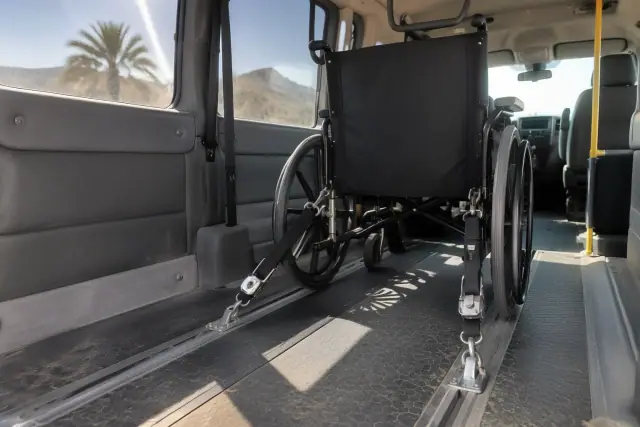
Straps connect the wheelchair to reinforced floor tracks. Their condition and attachment points matter because they secure the chair during vehicle movement.
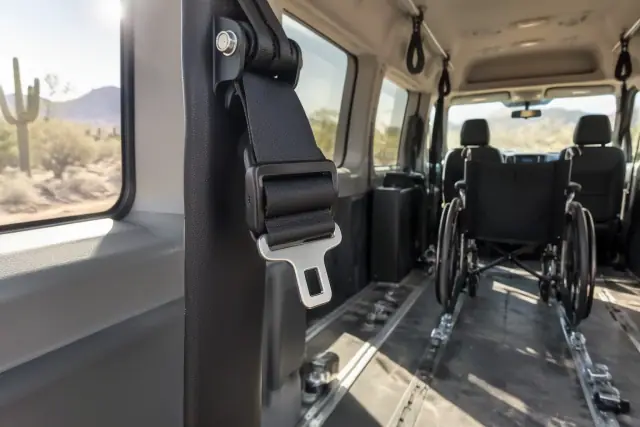
A lap and shoulder restraint protects the person seated in the wheelchair. Its purpose differs from both the chair tie-downs and the positioning belt.
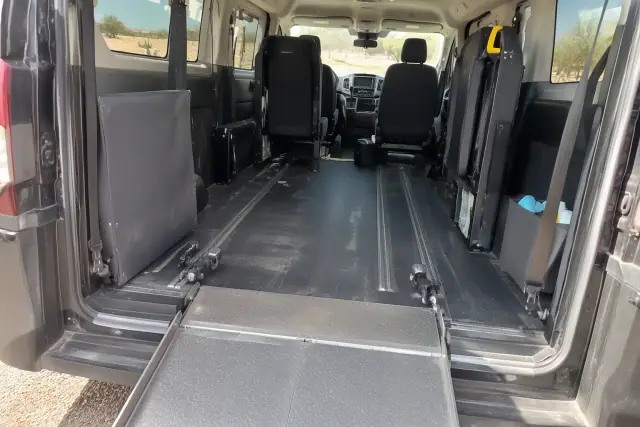
A suitable ramp or lift can let a passenger board without transferring out of the wheelchair. Equipment capacity, clearances, and trained assistance still matter during loading.
Confirm that the patient is comfortably supported before securement begins. Poor positioning can contribute to pressure injuries during a long ride, while an unsuitable transfer can cause skin shear.
Confirm wheelchair compatibility with the tie-down system, ramp or lift capacity, doorway width, and interior clearance. WC19 is a crash-testing standard relevant to wheelchairs used as vehicle seats; it does not replace correct securement.
Mesa summer temperatures can exceed 110 degrees Fahrenheit. A pre-cooled cabin and attention to discomfort during loading and unloading are especially relevant for dialysis and chemotherapy passengers who may be sensitive to heat or fatigue.
Speak directly to the patient and explain any lift, transfer, or securement step before proceeding. Confirm the destination and mobility limitations with the patient or caregiver, and address concerns before departure.
| Check | Concern | Before Departure |
|---|---|---|
| Wheelchair tie-downs | The chair may shift or tip if straps or anchors are loose or damaged. | Have trained staff verify all four connections, strap condition, and tension using the equipment instructions. |
| Passenger restraint | A positioning belt alone does not provide an appropriate vehicle restraint. | Confirm a properly fitted lap and shoulder restraint for the passenger. |
| Ramp or lift | Unsuitable capacity or access can make loading unsafe. | Confirm that the equipment suits the wheelchair and passenger and that the loading route is accessible. |
| Seating position | Poor support during a long ride can contribute to pressure injuries. | Discuss positioning needs and discomfort with staff before travel. |
| Cabin temperature | Summer heat can add strain during pickup and unloading. | Confirm cabin cooling and communicate any heat sensitivity before the ride. |
Wheelchair brakes help keep the chair stationary during positioning, but they do not secure it to a moving vehicle. A sudden stop or turn can move an inadequately secured chair even when its brakes are locked. The wheelchair tie-downs and the passenger restraint perform different jobs, so checking one does not replace checking the other. Safe transport also depends on careful driving and appropriate support throughout the ride, whether the destination is a dialysis appointment or a hospital discharge pickup.
A heavier wheelchair or bariatric passenger requires equipment suited to the chair and occupant, including adequate ramp or lift capacity. Stairs at the pickup point should be discussed before scheduling so trained staff can plan appropriate assistance rather than attempt a wheelchair-over-steps maneuver. Ask about pre-shift ramp and lift inspections, cleaning between patients, wheelchair securement training, CPR/BLS preparation, and defensive driving. Longer journeys also call for attention to positioning, cabin temperature, and signs of distress; these checks should support patient comfort as well as arrival timing.
What should happen first? Before tie-downs are attached, staff should confirm patient positioning and stabilize the chair in its transport position, following the equipment instructions. Does a short ride need the same restraints? Yes. The wheelchair and passenger both need proper securement regardless of trip length. What if the patient objects? Pause and listen to the concern, explain the proposed assistance, and involve the appropriate caregiver or referring facility. A refusal should be documented and addressed before proceeding.
When arranging a ride with Mesa Medical Transport, share the wheelchair type, mobility limitations, stairs or other access concerns, destination, and appointment time. Local wheelchair transport in Mesa typically costs $80 to $190 one way, depending on distance, time of day, and scheduling. Long-distance medical transport outside the Phoenix metro area can range from $125 to $1,200 or more, depending on vehicle type and mileage. Confirm the trip price, pickup arrangements, and insurance details before scheduling.